
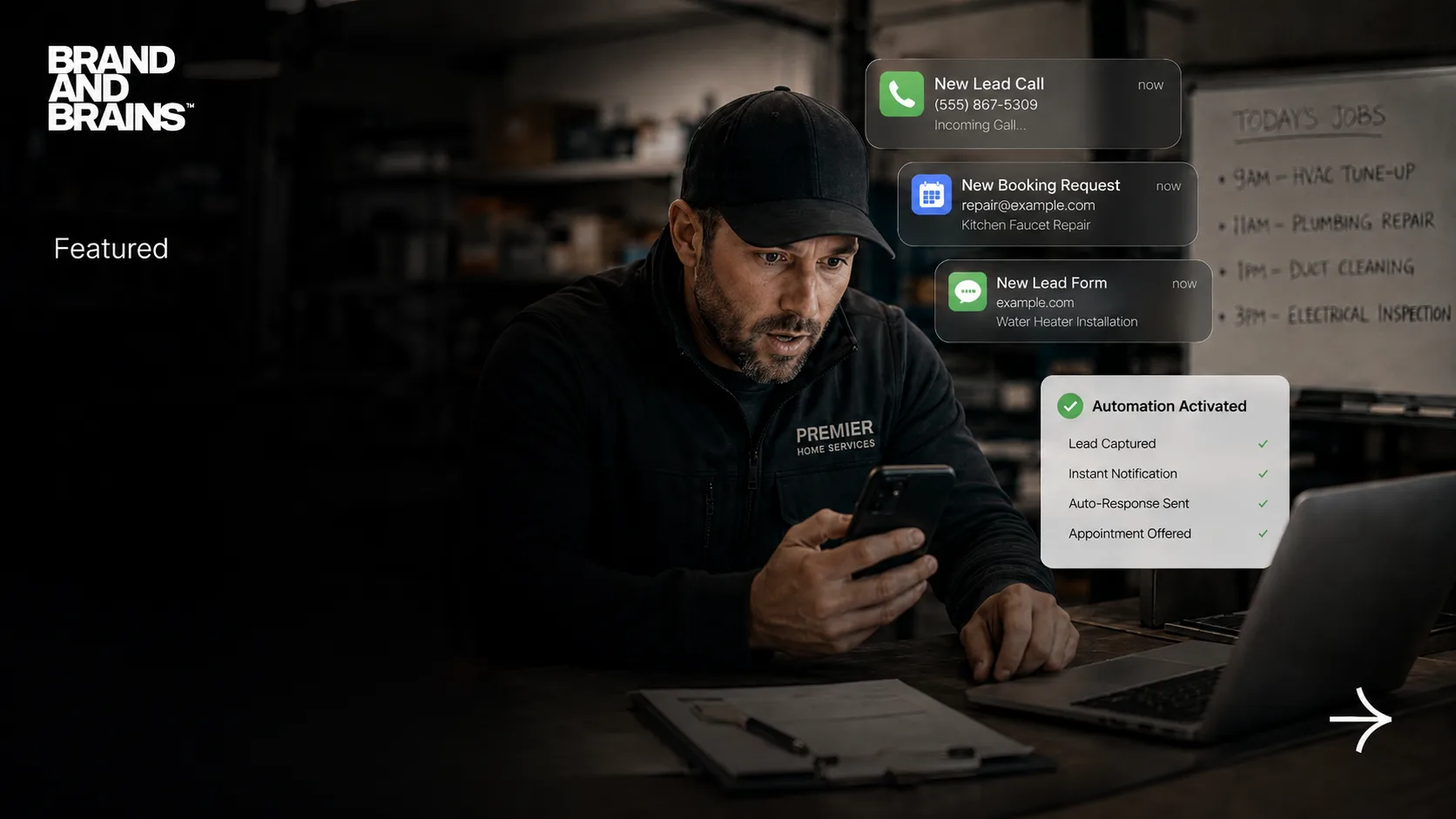
Speed-to-Lead Automation: Why Local-Service Clients Win or Lose in 5 Minutes
For a local-service business, the difference between winning a job and losing it often comes down to who calls back first. Speed-to-lead automation makes sure that's your client — automatically, in seconds, every time. It's one of the highest-impact, easiest-to-sell services an agency can offer, and it's a natural white-label revenue line.
For a local-service business, the difference between winning a job and losing it often comes down to who calls back first. Speed-to-lead automation makes sure that's your client — automatically, in seconds, every time. It's one of the highest-impact, easiest-to-sell services an agency can offer, and it's a natural white-label revenue line.
Why the first five minutes decide everything
When someone needs a plumber, an HVAC tech, or a roofer, they're rarely contacting just one business. They fill out a few forms and take the first credible callback. Research on lead response has consistently shown that contacting a lead within the first few minutes dramatically increases the odds of connecting and converting, and that those odds fall off a cliff as minutes turn into hours. For urgent home services, the window is even tighter. The business that responds first usually wins the job — full stop.
The problem: humans can't respond fast enough
A plumber is under a sink. A roofer is on a roof. They're not watching their inbox. By the time they see a lead and call back, the customer has already booked someone else. This isn't a motivation problem — it's a structural one. Local-service operators can't drop their tools to answer every lead in real time. That's the gap automation fills.
What speed-to-lead automation does
- Fires the instant a lead comes in — form fill, missed call, chat, or ad enquiry.
- Responds in seconds by text and/or email, before a competitor gets there.
- Missed-call text-back turns every unanswered call into an immediate conversation.
- Qualifies and can book the appointment automatically, even after hours.
- Alerts the business owner so a human can step in when it counts.
Why this is an easy sell for your agency
The value is concrete and immediate. You're not selling an abstraction — you're selling captured jobs the client was previously losing to slow response. That story is easy for a client to understand and easy to prove once it's running. And because it plugs directly into revenue, it retains: no owner wants to switch off the system that's booking their jobs.
How to deliver it without building it
Speed-to-lead runs on a platform layer — commonly GoHighLevel — with automations and increasingly AI voice agents handling the response. You don't need to build that infrastructure. A white-label partner sets it up under your brand, and you sell it as your agency's system. The client gets faster response; you get a recurring, sticky revenue line.
Frequently Asked Questions
How fast is 'fast enough' for lead response?
Seconds to a couple of minutes. Automation responds effectively instantly, which is well inside the window where conversion odds are highest.
Does automated response feel impersonal to customers?
Done well, it feels responsive, not robotic — a fast, helpful reply beats a slow human callback every time. Good setup keeps the tone natural and hands off to a person when needed.
What happens after hours?
That's where it shines. Automation and AI agents respond and can book jobs around the clock, capturing leads that would otherwise be lost overnight.
Want to offer speed-to-lead automation your clients can measure in booked jobs? Book a call and we'll set it up under your brand.